Easter Bunny Ears with Bow – Handcrafted Clip Art for Creative Projects
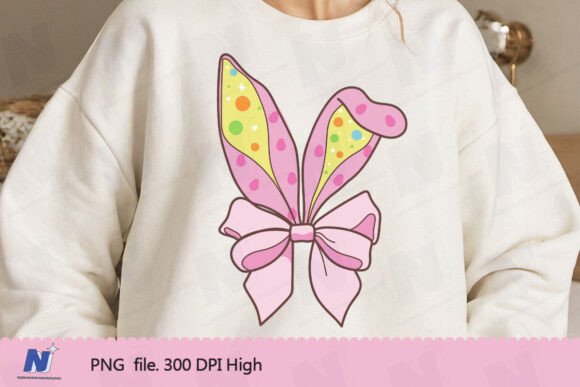
There is something genuinely refreshing about working with design assets that feel made by hand rather than churned out by automation. Easter Bunny Ears with Bow, created by ninoji1222, is exactly that kind of resource. Each graphic in this collection carries a handmade quality that stands apart from generic vector bundles. The ears themselves have a soft, organic curve—not rigid or overly symmetrical—and the bow adds a delicate, playful accent that immediately signals care and attention to detail. The linework is clean but not cold, with a warmth that suggests brush and pencil rather than a tablet pen set to maximum precision. That subtle imperfection is what gives the set its personality. It feels like something you would sketch out for a custom invitation, not something pulled from a template library.
The high-resolution format—300 DPI with transparent PNG backgrounds—means you can drop these elements into almost any project without wrestling with clipping masks or background removal. The transparency is clean, the edges are crisp, and the resolution holds up whether you are working on a digital mood board or a physical product mockup. For designers and small business owners juggling multiple projects, that kind of technical readiness saves real time. You are not fixing the asset. You are using it.
Visual Characteristics and Overall Appeal
These Easter bunny ears with bow sit comfortably in what I would call approachable elegance. The bow is not overly fussy or frilly; it is structured enough to read clearly at small sizes but detailed enough to hold interest when blown up for packaging or large-format prints. The ears themselves have a natural taper and a slight interior line that suggests fur or texture without overcomplicating the silhouette. The overall style leans toward modern whimsy—playful enough for children’s products but refined enough for stationery aimed at adults, like thank you cards for spring events or minimalist branding for a boutique bakery’s seasonal campaign.
The hand-drawn nature of the graphics gives them a distinct advantage in an era where so much commercial clip art feels sterile. When you place these ears on a product, they carry a sense of authenticity that resonates with audiences tired of overly polished, stock-looking visuals. That handmade quality communicates effort and originality. It tells your customer, “Someone thought about this.” And in a crowded marketplace—whether you are selling on Etsy, building a print-on-demand store, or pitching design concepts to a local business—that perception matters.
Where Easter Bunny Ears with Bow Works Best
Because the set includes high-resolution PNGs with transparent backgrounds, it adapts well to both digital and physical formats. Here are some of the most effective applications I have seen and used myself:
- Print-on-demand products: T-shirts, hoodies, tote bags, and pillows benefit from the clean silhouette. The bow adds a focal point that works well centered on a shirt or placed in a corner for a smaller accent graphic.
- Paper goods and stationery: Greeting cards, birthday invitations, thank you cards, and scrapbooking layouts are natural fits. The 300 DPI resolution ensures the details remain sharp even on coated cardstock or textured papers.
- Home decor and ceramics: Plates, mugs, and canvas prints can feature the design as a standalone element or as part of a larger spring-themed composition. The transparent background makes layering over patterns or photographs seamless.
- Digital products and planners: Drop the graphics into digital planners, social media templates, or blog graphics. The transparent PNG format preserves your background layer, so you can maintain a consistent aesthetic across your digital brand.
- Gift wrap and packaging: Small businesses running seasonal promotions can use the ears and bow on tissue paper, gift tags, or product labels. The handmade style pairs well with kraft paper and natural textures.
The versatility here comes from the design itself being neither overly literal nor overly abstract. It reads clearly as an Easter motif but does not rely on obvious holiday clichés. That means you can use it for spring-themed projects well beyond Easter Sunday—think baby showers, garden party invitations, or even a children’s book illustration.
How This Design Asset Influences Brand Perception and Readability
In branding and marketing, every visual element carries weight. A well-chosen graphic does not just decorate a page; it shapes how your audience feels about what they are seeing. Easter Bunny Ears with Bow operates as more than decoration because its handmade aesthetic signals a few specific things to viewers: care, originality, and approachability. When you incorporate this graphic into a logo design, social media graphic, or packaging concept, you are implicitly telling your audience that your brand values craftsmanship over shortcuts.
From a readability and visual hierarchy standpoint, the design is straightforward to work with. The bow creates a natural top anchor, drawing the eye upward, while the ears extend outward and downward in a stable, balanced shape. That makes it easy to position text either below the graphic, centered within the negative space, or wrapped around the silhouette. The transparent background preserves your ability to control the layout without fighting against a rigid frame.
Consistency is another factor worth noting. Because all the graphics in the set share the same hand-drawn style and line weight, you can use multiple elements across a product line—say, a mug and a matching greeting card—and maintain a cohesive look. That kind of visual consistency is what separates amateur-looking merchandise from professional-feeling brand extensions. For entrepreneurs building a product catalog, this matters a great deal. You do not want your t-shirt design to look like it came from one artist and your card design from another.
Practical Guidance for Choosing and Using the Set
When evaluating whether Easter Bunny Ears with Bow fits your project, start with the tone you want to communicate. This graphic leans gentle and charming rather than bold or edgy. If your brand voice is playful, warm, or family-oriented, it will integrate naturally. If you are working on something more minimalist or modern, you can still use it as a subtle accent—try scaling it down and placing it in a corner or using it as a small repeating pattern element.
For font pairing, you will want to match the hand-drawn quality of the graphic with a script font or a handwritten-style typeface. A clean sans serif font can also work if you are going for contrast, but avoid overly rigid or formal serif fonts that might clash with the organic lines of the ears and bow. If you are designing a greeting card, try pairing the graphic with a display font that has a light, airy weight. For social media graphics, a modern typography approach with a rounded sans serif keeps things cohesive without competing for attention.
Readability considerations are minimal because the graphic itself does not contain text. However, if you are placing it behind text—for example, on a mug or a shirt—make sure the contrast is sufficient. Light-colored ears against a dark background work well with white or pastel text. Dark outlines against a light background pair best with bold or medium-weight typefaces so the text does not disappear into the line art.
From a licensing standpoint, the included terms allow commercial use in printed products, print-on-demand items, and digitally finished designs that you have creatively modified. You cannot resell or distribute the original PNG files themselves, but you can use them as components in your own original products. That is standard for quality commercial font and graphics licensing, and it gives you the freedom to build a product line without worrying about infringement. If you are designing for clients or selling physical goods, double-check that your intended use falls within the permitted guidelines—especially if you plan to offer the graphics as freebies or standalone digital downloads.
Real-World Examples and Design Observations
I have seen this style of hand-drawn clip art used effectively in a spring marketing campaign for a local coffee shop. They printed the ears and bow on a limited-edition tote bag and paired it with a handwritten-style tagline. The bag sold out in under two weeks. What worked was not just the design itself but the fact that it felt personal. Customers responded to the handmade look because it matched the shop’s brand identity—small batch, carefully made, community focused.
Another example: a wedding stationery designer used similar hand-drawn motifs for a spring-themed bridal shower invitation suite. The ears and bow became a subtle motif repeated across the invitation, the thank you card, and the envelope liner. Because the graphics were high resolution and had transparent backgrounds, layering them over floral watercolor textures was straightforward. The result was a cohesive, elegant suite that did not look like it relied on generic clip art.
One observation worth noting: the bow detail is small enough to be used as a repeating accent but distinct enough to stand alone. If you are designing a pattern for wrapping paper or fabric, consider rotating and scaling the ears and bow at different sizes to create rhythm without monotony. The hand-drawn quality ensures that even repeated elements feel organic rather than robotic.
Final Thoughts on Working with This Asset
Design resources like Easter Bunny Ears with Bow are most valuable when they save you time without sacrificing originality. The high-resolution PNG format, transparent backgrounds, and hand-drawn aesthetic give you a head start on projects that would otherwise require commissioning custom illustration or spending hours perfecting a vector yourself. For designers, small business owners, and content creators who need to produce polished work on a regular basis, that combination of convenience and quality is hard to beat.
The key is to treat the graphics as a starting point rather than a finished solution. Layer them into your compositions, pair them with thoughtful font pairing choices, and modify them to fit your brand’s brand identity. When you do that, the final product feels like yours—and that is exactly how commercial design assets are meant to work.